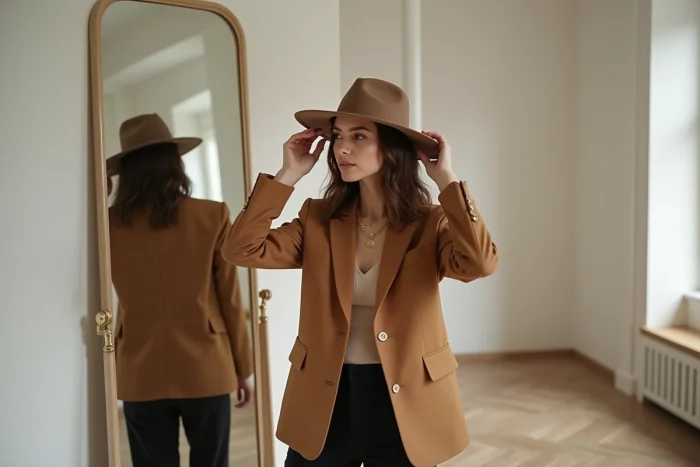
A silk scarf worn on a bag, a leather bracelet layered over a gold cuff, a vintage brooch pinned on a solid blazer: accessories transform a basic outfit into a bold silhouette. Elevating your style with trendy accessories doesn’t require an overflowing wardrobe, but rather a few carefully chosen pieces that can transition effortlessly from one look to another.
Original accessories and versatility: the true selection criterion
Have you ever fallen for a spectacular piece of jewelry, worn it once, and then tucked it away in the back of a drawer? The problem rarely lies in taste, but rather in a lack of versatility. An original accessory must work with at least three different outfits to justify its place in your daily life.
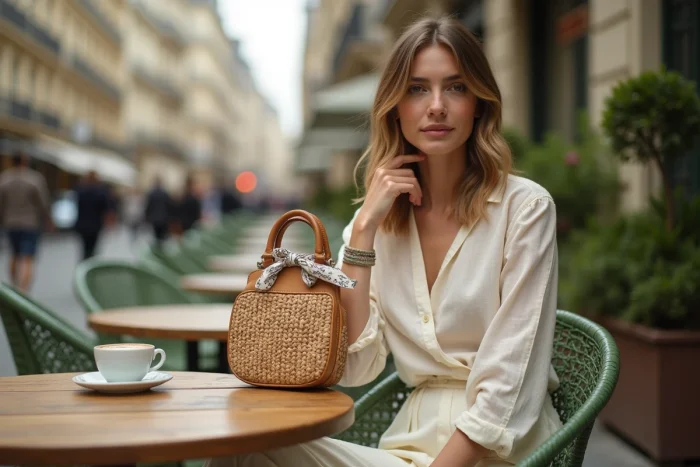
Take the example of a printed scarf. Tied around the neck over a turtleneck, it adds contrast. Attached to the handle of a leather bag, it changes the look of that bag. Worn as a headband, it completes a summer hairstyle. Three uses, one accessory. It’s this logic that separates a standout piece from an anecdotal one.
To find pieces that meet this versatility requirement, the accessories offered by Mode For You allow you to combine originality and wearability across various outfits.
The classic pitfall is the overly distinctive accessory. An entirely ethnic set or a very bulky piece of jewelry can enhance a solid dress, but they will limit your combinations for the rest of the week. It’s better to choose a handcrafted bracelet in neutral tones than a statement necklace that demands its own staging.
Mixing handcrafted pieces and contemporary accessories
The most pronounced trend at the moment is to combine traditional and modern accessories in the same outfit. The result: a stylistic contrast that expresses an identity, not just a passing trend.
How to achieve contrast without overloading
The simplest rule to remember: one strong element per body area. If you’re wearing statement earrings made of handcrafted beads, keep your necklace discreet or skip it altogether. If your bag is a handwoven leather piece, keep your bracelets simple.
In practical terms, this leads to combinations like these:
- A handcrafted braided leather bracelet worn with a minimalist steel watch, on an otherwise bare wrist
- A wax fabric scarf tied on a solid canvas tote bag, with simple geometric earrings
- A vintage enamel brooch pinned on a modern oversized blazer, with no other visible jewelry above the waist
This principle of controlled contrast allows you to wear original pieces without slipping into a total thematic look. Each accessory retains its clarity because it has space around it.
Colors and materials: the invisible link
When the styles of your accessories are distant (handcrafted and contemporary, for example), it’s the consistency of color or material that unifies the whole. A wooden bead bracelet and a camel leather bag share a warm palette. A navy silk scarf and silver metal earrings play on the same cool temperature.
Linking accessories by color rather than by style provides a much broader combination freedom. You can mix handmade and contemporary pieces without the whole look appearing disjointed.
Trendy everyday accessories: pieces that change a look in thirty seconds
Some accessories have a disproportionate visual impact relative to their simplicity. They don’t cost more than others, but they change the overall perception of an outfit.
The scarf, the most underestimated accessory
A quality square of fabric (silk, fine cotton, modal) can be worn in ten different ways. Tied like a tie over an open blouse, it structures the bust. Wrapped around the wrist, it replaces a bracelet. The scarf is the accessory with the best originality-versatility ratio.
To keep it wearable daily, opt for medium dimensions (around 70 cm per side) and patterns that are not visually overwhelming: wide stripes, abstract prints, solid colors with a contrasting border.
Layered bracelets: the right dose
Layering bracelets works, as long as you maintain balance. Mix materials (leather, metal, beads) but stick to a maximum of two colors. Beyond four bracelets on the same wrist, the effect becomes cluttered for most body types.
Are you torn between a thick bracelet or several thin ones? The thin ones add movement and adapt to a wider range of sleeves (shirt, sweater, jacket). The thick one has more presence but limits combinations.
The bag as a stylistic signature
The bag is often treated as a utility item. Yet, it’s the piece that is seen first in a street silhouette. A grainy leather bag in an unexpected shade (sage green, terracotta, midnight blue) adds personality without clashing with the rest of the outfit.
Choosing a bag in a neutral but unexpected color rather than the default black is the simplest way to assert a personal style daily.
Avoiding the “too styled” effect: the limit to know
An accessory becomes cumbersome when it draws all the attention to itself at the expense of the outfit. The most reliable sign: if you’re only complimented on the accessory without anyone noticing the rest, the balance is broken.
The remedy is simple. Before heading out, identify your standout piece of the day (a necklace, a hat, a bag). All your other accessories should play a supporting role, not a starring one. This principle works equally well for casual outfits as for dressed-up looks.
- Strong piece at the neck? Wrists and ears remain understated
- Very colorful or textured bag? Solid shoes, discreet jewelry
- Statement shoes? Neutral bag and minimalist jewelry
One focal point per outfit is enough to create a memorable look. Multiplying strong pieces dilutes their effect rather than amplifying it.
True style with accessories doesn’t depend on their number or price. It relies on each piece’s ability to serve multiple outfits, multiple seasons, and multiple contexts. An accessory you wear three times a week without thinking is worth more than a spectacular piece of jewelry forgotten in its box.