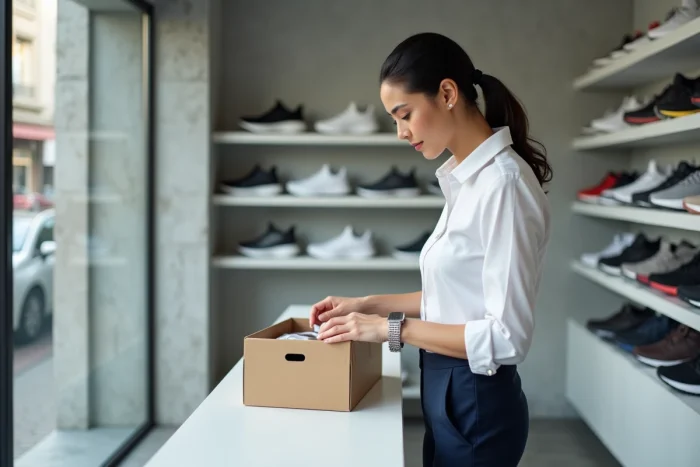
Retail and resell share a common vocabulary, that of selling to the end consumer, but their market mechanics diverge on a fundamental point: one distributes a new product, while the other assigns a second market value after purchase. This distinction, long confined to discussions among sneaker collectors, now structures entire segments of brand commercial strategy.
Retail and resell: two pricing logics for the same product
Retail refers to the sale of goods or services directly to the end consumer, in small quantities. The term comes from the French “retailler,” meaning to cut into individual portions, as opposed to wholesale sales intended for professionals. Retail, its French equivalent, encompasses both physical stores and online shops.
Resell operates differently. A buyer acquires a product at the retail price and then resells it, often at a higher price, on a secondary market. The resell price depends on perceived rarity, not production cost. A pair of sneakers sold for 170 euros at retail can exchange for several times that amount just hours after its release, if the run is limited.
To better understand the definition of retail and resell, one must observe this price gap as a signal: when resell prices sustainably exceed retail prices for a product, it indicates that demand exceeds the supply intentionally restricted by the brand.
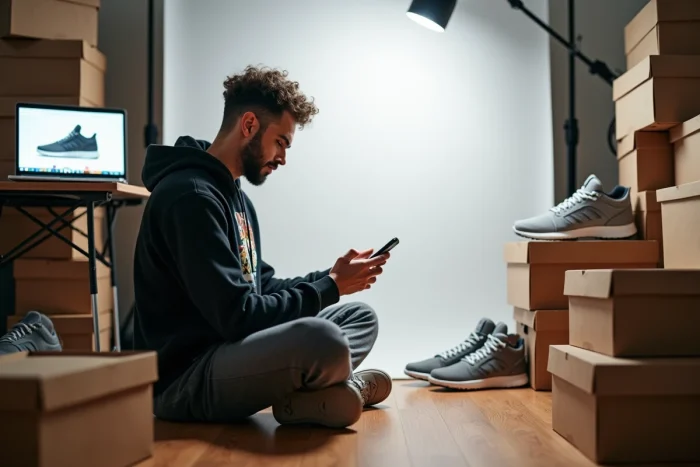
How resell modifies brand commercial strategy
For a long time, brands viewed the secondary market as a parallel channel they did not control. This stance has changed. Longchamp, for example, launched a second-hand store operated with Faume, integrating resale directly into its sales strategy. The “We Resell” program is part of a broader initiative (“We Produce, We Care, We Repair”) that includes the restoration of 80,000 items according to industry press.
This shift means that resell is no longer a market endured but a channel managed by brands. The boundary between retail, after-sales service, and the circular economy is blurring. For the customer, buying a “pre-owned” bag directly from the brand offers a guarantee of authenticity that third-party platforms struggle to replicate consistently.
Competitive pressure on retail prices
Resell creates a dynamic that traditional retail did not experience. A product whose value rises on the secondary market pushes the brand to choose between several options:
- Increase the retail price to capture the margin that resellers pocket, risking alienating part of the historical customer base
- Further limit quantities to maintain rarity and desirability, which in turn fuels resell
- Take control of resale by launching an official second-hand channel, as Longchamp has done
None of these responses is neutral. Each reconfigures the relationship between the brand, the store, and the end consumer.
The omnichannel touchpoint at the center of current retail
Reducing retail to the physical store no longer reflects the reality of the sector. Retail is now understood as a system of interaction between channels: store, online site, mobile app, social networks. The customer experience flows seamlessly from one medium to another, which professional vocabulary refers to as omnichannel sales.
Resell follows the same trajectory. Transactions occur on specialized apps, general marketplaces, or in person at dedicated events. The product circulates between these channels with a fluidity that traditional retail takes years to achieve.
Stock management and customer data
For a retailer, transitioning to omnichannel requires unified stock management and a detailed reading of purchasing data. Knowing that a product resells above its retail price on the secondary market is a valuable indicator for adjusting upcoming collections or production volumes.
Resell data informs retail strategy. Some brands monitor the resale prices of their own products to identify which references to relaunch or which ones warrant expanded production. Product marketing now incorporates this feedback loop.
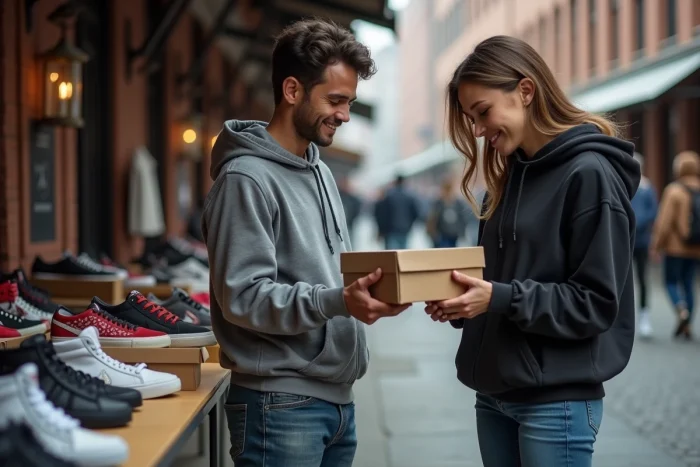
Limits and gray areas between retail and resell
The coexistence of these two markets does not come without friction. On the regulatory front, field returns diverge on this point: reselling a product purchased in-store falls under property rights, but organizing this resale on a large scale raises fiscal and contractual questions that each country addresses differently.
On the consumer side, confusion exists. A resell purchase does not offer the same guarantees as a retail purchase (return policy, manufacturer warranty, after-sales service). Resale platforms have implemented authentication systems, but counterfeits circulate, and responsibility in case of disputes remains unclear when the intermediary is neither the manufacturer nor an authorized retailer.
- Retail guarantees a direct contractual link between the consumer and the brand or distributor
- Resell relies on trust between individuals or the credibility of a third-party platform
- “Official” resale programs (like Longchamp-Faume) attempt to combine the two, but their coverage remains limited to a few brands
The resell market is redefining the contours of retail without replacing it. Retail and resell now function in a mirror: the former sets a price, the latter tests it. Brands that integrate this dynamic into their commercial management gain an advantage. Others let the value of their products slip away on channels they do not control.